Indoor cellular technologies explained: which one is right for your building?
Dead zones in offices, warehouses, and campuses are no longer just a nuisance—they affect safety, operations, and the people who depend on reliable connectivity every day. The market offers a range of indoor cellular solutions, but the differences between them matter enormously when it comes to cost, installation time, and long-term performance.
We'll cover:
- How each major indoor cellular technology works
- Where each approach excels or falls short
- What to look for before you commit to a solution
- How Meter Cellular compares
- Answers to the questions IT and facilities teams ask most
What is passive DAS, and when does it make sense?
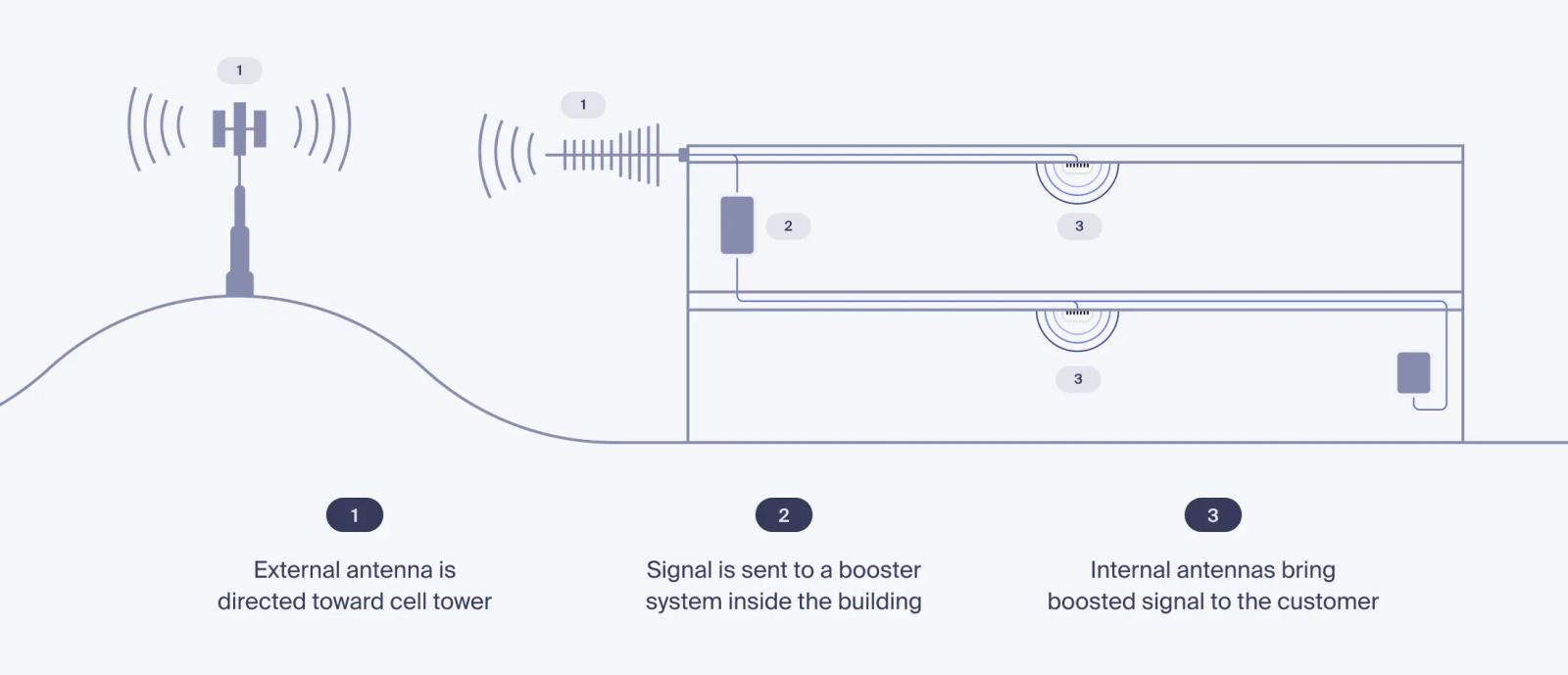
Passive distributed antenna systems (DAS) amplify an outdoor cellular signal and redistribute it indoors using coaxial cable, splitters, and antennas. No powered remote units are involved.
The upside is cost and simplicity. A passive DAS installation for a 50,000 sq ft building typically runs $50,000 or more, which is significantly less than active alternatives. Installation is relatively fast—one to four months—and the system is straightforward to understand.
The fundamental limitation of passive DAS is that it depends entirely on the strength of the outdoor signal it's amplifying. In dense urban areas, basements, concrete-heavy buildings, or locations far from towers, performance degrades quickly. Signal loss accumulates across the coaxial runs, limiting range and scalability in larger or more complex spaces. It also covers only the frequencies present in the existing outdoor signal, which constrains future-proofing as carriers evolve.
What is active DAS—and why is it so expensive?
Active DAS distributes radio frequency (RF) signals over fiber or Ethernet using powered remote units throughout the building. Rather than amplifying an outdoor signal, it generates its own indoor signal from a headend connected to carrier base stations.
The performance ceiling is high. Active DAS delivers excellent capacity and reliability across large, complex venues—it's the system of choice for stadiums, airports, and hospitals. But that performance comes at significant cost and complexity. A 500,000 sq ft deployment can exceed $1.9 million, not including ongoing maintenance. Installations routinely take 12 or more months, require dedicated equipment rooms with cooling, involve complex carrier coordination, and demand specialized RF expertise to operate and upgrade.
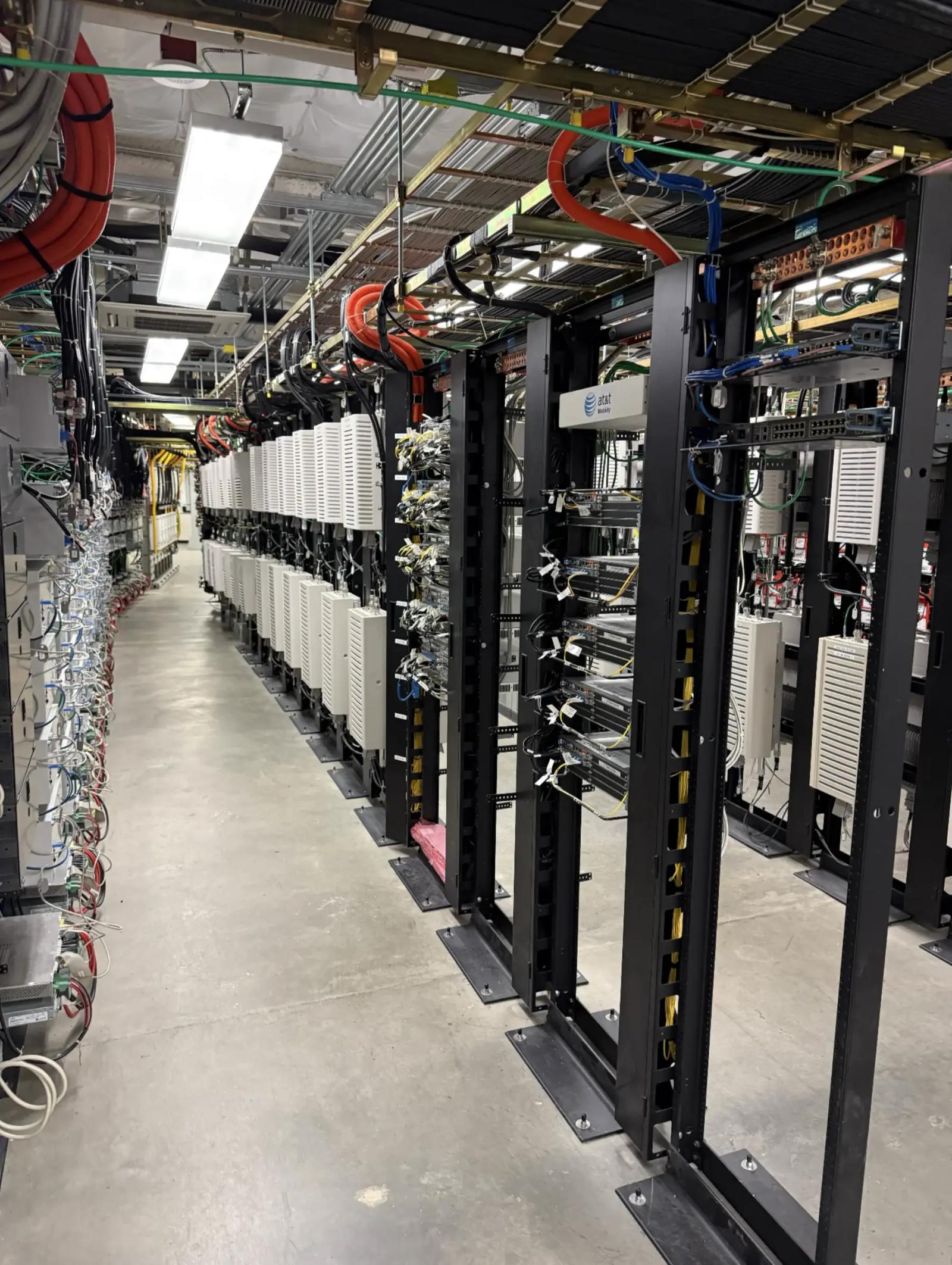
Active DAS is purpose-built for very large, high-density venues—and its cost and complexity reflect that. For most enterprise buildings, it's more infrastructure than the problem requires. As an example, below is the Active DAS setup at Husky Stadium at the University of Washington.
What is hybrid DAS?
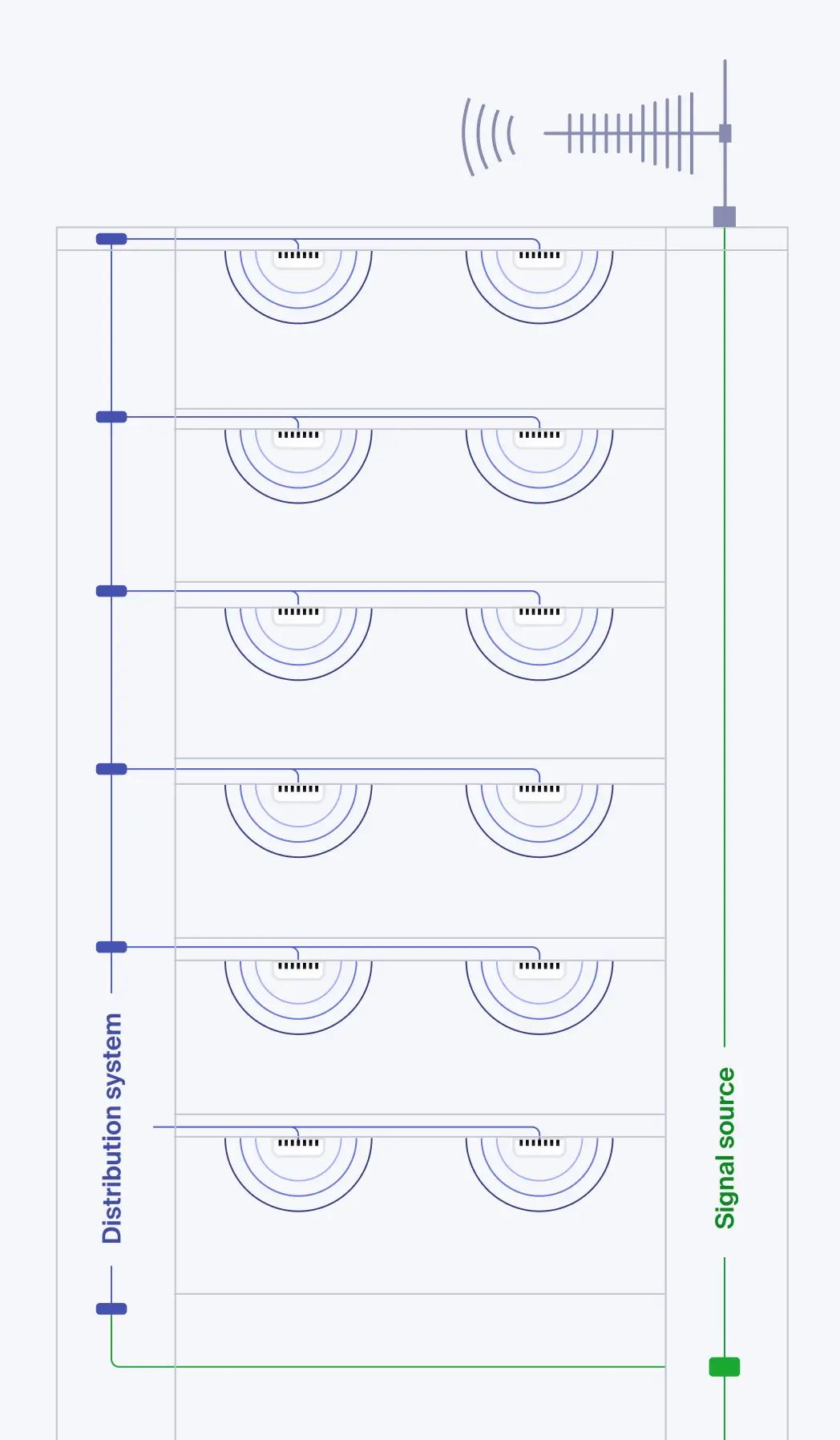
Hybrid DAS combines elements of both passive and active architectures—typically using fiber for long backbone runs and coaxial cable for local distribution to antennas. The goal is to reduce the signal loss of a fully passive system without the full cost and complexity of a fully active one.
It's a reasonable middle ground for mid-sized buildings with specific layout constraints, but it still requires significant infrastructure work, carrier coordination, and ongoing management. The deployment timeline and ownership model are closer to active DAS than passive.
What are on-air and off-air DAS?
These terms describe how a DAS system sources its signal.
Off-air systems capture existing outdoor macro cell signals via an external antenna and amplify them indoors—essentially the mechanism behind passive DAS and repeater-based systems. Performance is bounded by whatever signal exists outdoors.
On-air systems generate signal indoors using carrier-provided base station equipment, typically connected via dedicated fiber backhaul. This is the signal source behind active DAS. On-air architectures deliver higher capacity and more consistent performance, but they require direct carrier involvement, which adds coordination time, cost, and dependency.
What are MORAN and MOCN architectures?
These are two approaches to sharing cellular infrastructure across multiple carriers that have emerged as alternatives to traditional DAS.
Multi-operator radio access network (MORAN) allows multiple carriers to share the same physical radio infrastructure while each maintains its own licensed spectrum. Each operator controls its own radio access but shares the hardware. MORAN deployments are fast, use CAT6 and fiber rather than coaxial cable, and scale well across generations of spectrum—including 5G and eventually 6G. Service quality is excellent, and the architecture is well-suited to enterprise environments with space and power constraints.
Multi-operator core network (MOCN) goes further, enabling carriers to share both the radio infrastructure and spectrum. It's cost-effective but introduces more coordination complexity, and U.S. carrier support remains limited. For most enterprise buyers, MORAN offers the better balance of performance, deployment speed, and long-term carrier alignment.
How do these technologies compare side by side?
| Installation & deployment | Procurement & management | Spectrum constraints | Service quality & reliability | Lifecycle costs and ownership | |
|---|---|---|---|---|---|
| Active DAS | Slow | Complex | Scoped to existing frequencies | Good | Expensive |
| Passive DAS (Repeaters & boosters) | Fast | Easy | Limited to a few frequencies | Poor | Cost-effective |
| MOCN | Fast, with limited carrier support | Complex | Shared spectrum, limited carrier support | Good | Cost-effective |
| MORAN | Fast | Easy | Upgrades to new generations (5G, 6G) | Excellent | Cost-effective |
| Wi-Fi calling | Fast | Easy | Internet/Wi-Fi | Poor | Cost-effective |
The right choice depends on building size and construction, carrier requirements, budget, and how much operational complexity your team can absorb long-term.
How Meter Cellular fits into this landscape
Meter Cellular is built on neutral host MORAN architecture, which means all three major carriers are supported on shared infrastructure using licensed spectrum. Users connect the same way they would to their native cell tower—no app, no carrier profile, no captive portal.
What makes Meter Cellular different is how it installs and operates. Instead of coaxial cable runs and dedicated equipment rooms, Meter uses your existing network infrastructure. Each Cellular Access Point connects over a single Ethernet cable and integrates directly into Meter's standard network stack. That reduces a typical DAS deployment timeline from 12 or more months to four to six months.
Meter provides and installs all hardware, manages ongoing maintenance, and includes proactive alerting and 24/7 operations support. Enhanced 911 (E911) is supported with precise location data sent automatically to dispatchers. The system scales from a single building to a 3 million sq ft warehouse or hundreds of distributed retail locations—all under one predictable monthly subscription with no upfront capital expenditure.
For IT and facilities teams evaluating indoor cellular as long-term infrastructure rather than a one-time project, that combination of performance, simplicity, and operational ownership is what sets Meter apart from traditional DAS approaches.
Frequently asked questions
Does Meter Cellular work in basements and high-attenuation areas?
Yes. Because Meter Cellular generates its own indoor signal rather than amplifying what's outside, coverage quality isn't dependent on what reaches your building from macro towers. Cellular Access Points are placed based on your specific floor plan and construction materials, including concrete-heavy or below-grade areas that routinely defeat passive and off-air approaches.
Which carriers does Meter Cellular support?
Meter Cellular supports all three major U.S. carriers on shared neutral host infrastructure. Employees, visitors, and devices connect automatically to their native carrier—no configuration, app, or carrier profile required.
What does installation actually involve?
Each Cellular Access Point connects over a single CAT6 Ethernet cable and integrates into your existing network stack. There's no new coaxial cabling, no dedicated equipment room, and no roof access required. Meter handles the full installation; typical deployments complete in four to six months, compared to 12 or more months for active DAS.
What happens when carriers upgrade their spectrum or enable new 5G features?
Because Meter Cellular uses MORAN architecture with licensed spectrum, the system is designed to carry upgrades to new spectrum generations—including 5G and 6G—without requiring a full infrastructure replacement. Meter manages software and firmware updates across the system.
How is the system monitored, and will we have real-time visibility into performance?
Meter provides proactive alerting and 24/7 operations support. Your team has visibility into system status, and Meter handles troubleshooting and carrier escalations directly—so your IT team isn't the one on hold with a carrier when something goes wrong.
Does Meter Cellular meet E911 requirements?
Yes. The system automatically sends the caller's precise location to dispatchers, satisfying E911 requirements and supporting faster emergency response.
What does it cost, and are there upfront hardware fees?
Meter Cellular is priced as a monthly subscription with no upfront capital expenditure. There's no hardware to purchase, and the subscription covers installation, ongoing maintenance, and operations support. Pricing scales with your space.
How does Meter handle multi-site or large-scale deployments?
The system is built to scale—from a single building to a 1 million sq ft warehouse to hundreds of distributed retail locations. Each deployment is managed under the same unified infrastructure, so your team doesn't need to juggle separate vendors or systems as you grow.
What infrastructure does the system require on our end?
A working Ethernet connection to each access point location is the primary requirement. Meter's team assesses your space during the design phase and identifies any infrastructure needs before installation begins.
Who owns support and escalation?
Meter does. Rather than your IT team coordinating between a DAS integrator, multiple carriers, and an equipment vendor, Meter takes ownership of the full system—including carrier relationships, hardware, and ongoing operations.
Schedule a demo at meter.com/demo